Quadratic formula
solver
Every quadratic equation, ax squared plus bx plus c, is solved by the same formula. Enter the three coefficients and read the roots, the discriminant and what kind of solutions you have.
Doing it by hand too?
A few solid picks. As an Amazon Associate, Calculate.to earns from qualifying purchases, at no extra cost to you.
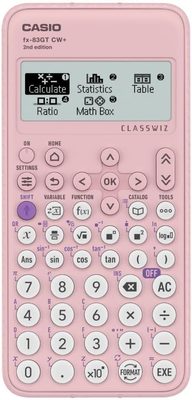
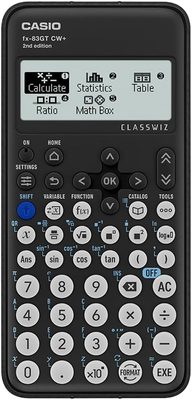
 Casio fx-83GTCW+
The UK classroom-standard scientific calculator (also in pink), allowed in most UK exams.
View on Amazon →
Casio fx-83GTCW+
The UK classroom-standard scientific calculator (also in pink), allowed in most UK exams.
View on Amazon →
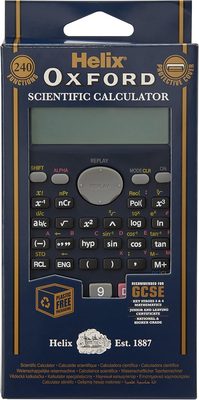
 Helix Oxford Scientific
240-function scientific calculator for KS3–KS4 maths, with hard cover. Exam-friendly, plastic-free packaging.
View on Amazon →
Helix Oxford Scientific
240-function scientific calculator for KS3–KS4 maths, with hard cover. Exam-friendly, plastic-free packaging.
View on Amazon →
 OSALO Desktop Calculator
Extra-large 12-digit LCD, giant buttons, solar + battery, the classic office desk workhorse.
View on Amazon →
OSALO Desktop Calculator
Extra-large 12-digit LCD, giant buttons, solar + battery, the classic office desk workhorse.
View on Amazon →
 ROATEE Construction Calc
Feet-inch-fraction engineering calculator for carpenters, framers and contractors on site.
View on Amazon →
ROATEE Construction Calc
Feet-inch-fraction engineering calculator for carpenters, framers and contractors on site.
View on Amazon →
The quadratic formula
For ax squared plus bx plus c = 0, the roots are x = (minus b, plus or minus the square root of (b squared minus 4ac)) divided by 2a. The part under the root, b squared minus 4ac, is the discriminant and it decides what kind of answers you get.
What the discriminant tells you
If the discriminant is positive there are two real roots; if it is zero there is one repeated root; if it is negative the roots are a complex conjugate pair, shown here as a plus or minus bi. The turning point of the parabola sits at x = minus b over 2a.
Quadratic formula FAQ
Then it is not quadratic but linear, bx + c = 0, with a single root at x = minus c over b. The tool handles that case for you.
There are no real solutions; the parabola never crosses zero. The roots are complex numbers, a real part plus or minus an imaginary part.
It gives the roots, which are the factors: if the roots are p and q, the equation is a times (x minus p)(x minus q).
Results are rounded to three decimals for display, while the underlying calculation uses full floating-point precision.